As-Built Modelling Services
for Construction & BIM Projects
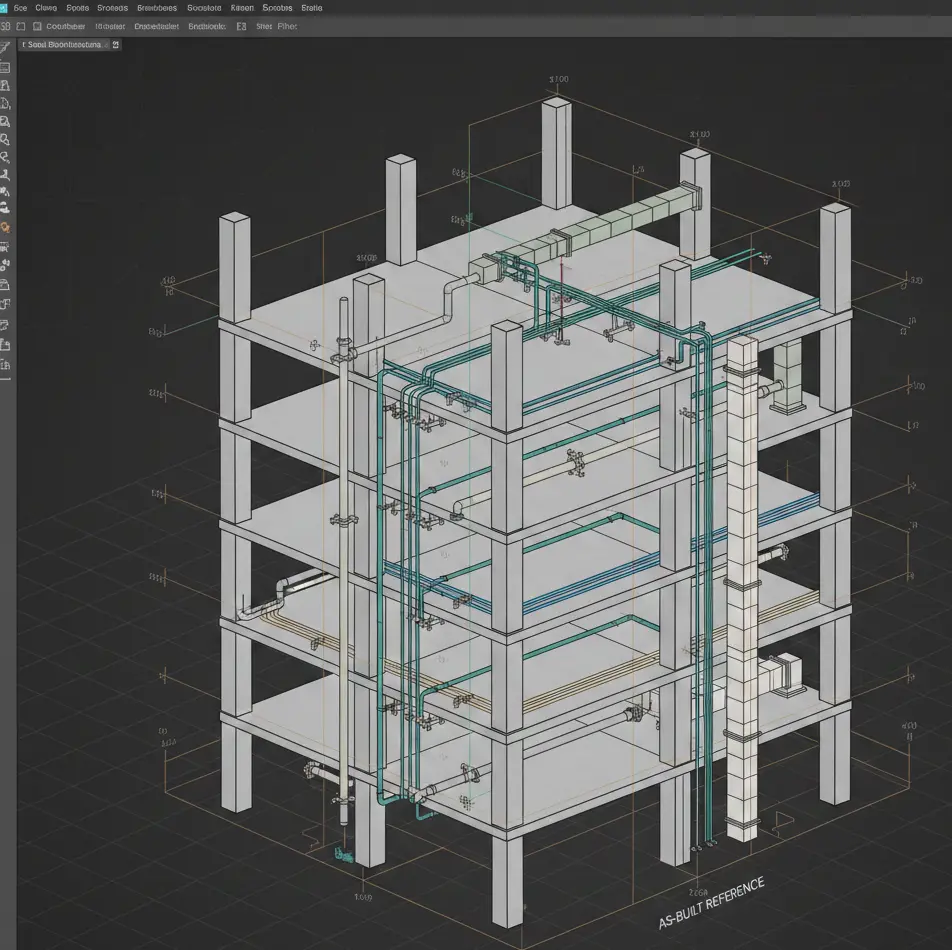
As-built modelling is used to represent the actual installed condition of a building or facility after construction, refurbishment, or system modifications. Unlike design or coordination models, as-built models reflect verified site conditions, capturing the final geometry, locations, and configurations of building elements and services as they exist on site.
This service is commonly used to establish accurate digital records for asset management, future modifications, coordination validation, and operational planning.
What As-Built Modelling Represents
As-built models are developed using verified information sourced from site documentation, redline mark-ups, construction drawings, and reality capture data. The resulting models provide a reliable digital reference that reflects what has been physically constructed rather than what was originally designed.
These models support long-term project value by preserving accurate spatial and system information for future use.
When As-Built Modelling Is Required
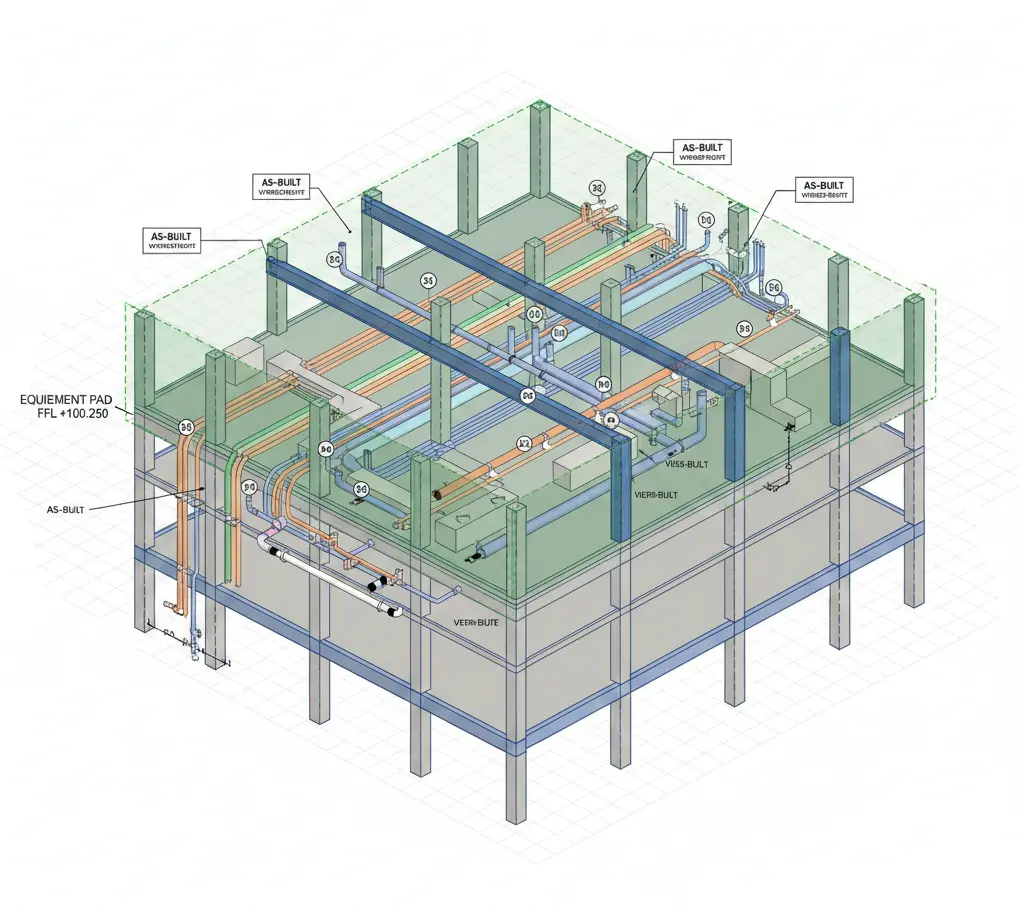
As-built modelling is typically required at the completion of construction or refurbishment works, or when existing facilities require accurate documentation for future upgrades. It is also used where original drawings no longer represent current site conditions due to undocumented changes or phased construction updates.
In operational buildings, as-built models support maintenance planning, coordination of new works, and verification of installed services before further design or construction activities.
Project Types That Use As-Built Models
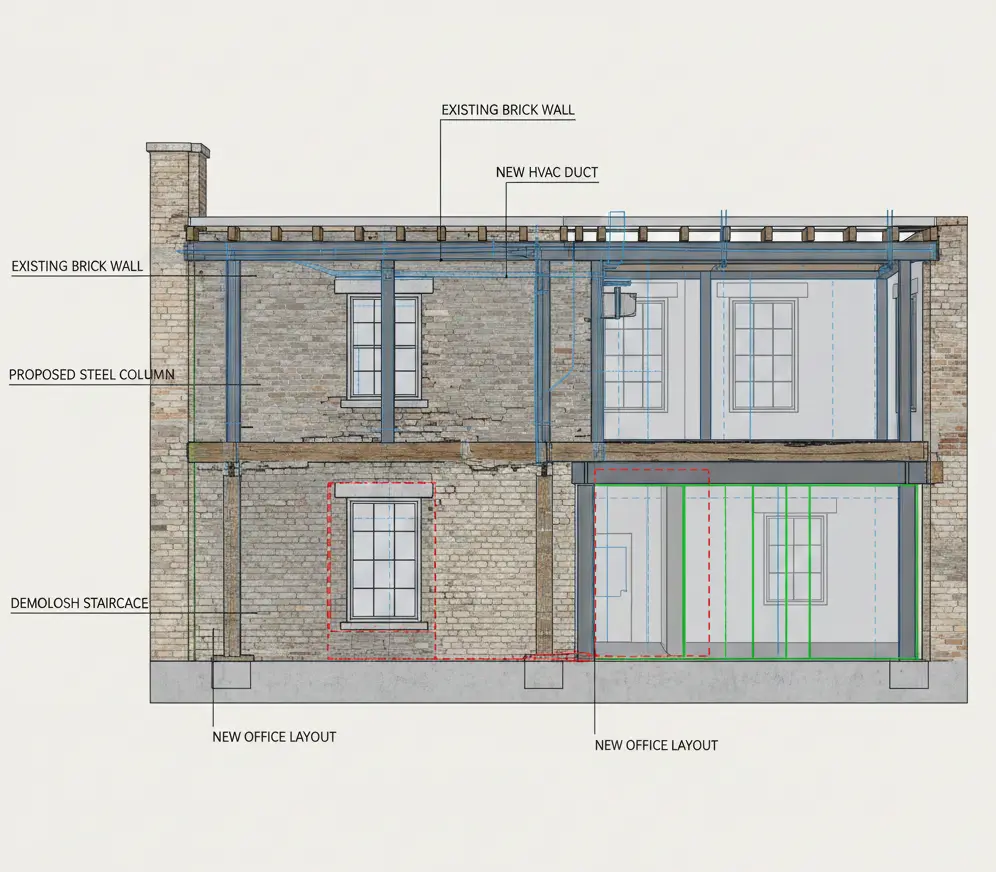
As-built modelling is applied across commercial, industrial, healthcare, education, and residential projects. It is particularly valuable in service-dense environments such as plant rooms, ceiling voids, risers, and technical areas where accurate spatial coordination is essential.
These models are frequently used as reference documents during future refurbishment, expansion, or system replacement works.
Relationship With Site Data and Reality Capture
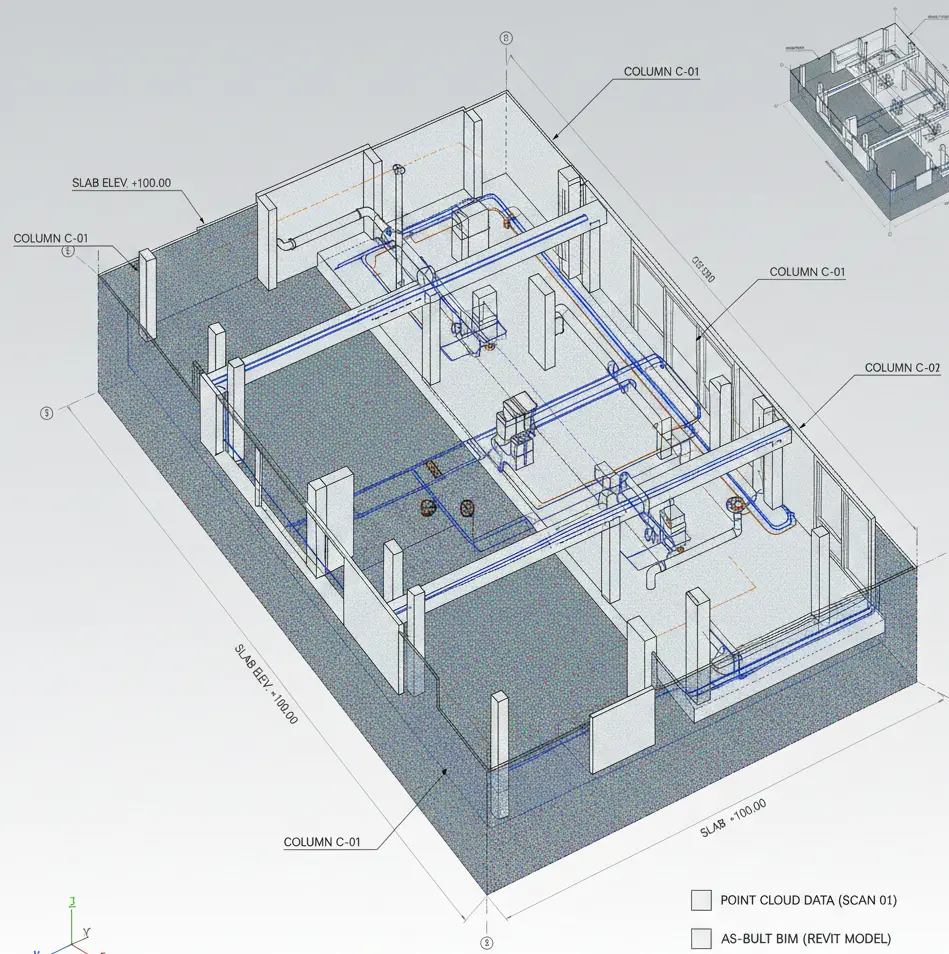
As-built modelling often relies on verified site information to ensure accuracy. Where available, point cloud data from 3D scanning or other reality capture methods is used to validate geometry and confirm installed locations. This approach reduces reliance on assumptions and improves confidence in model accuracy.
By aligning modelling outputs with real-world conditions, the resulting as-built models provide dependable documentation for downstream use.
Integration With BIM and Coordination Workflows
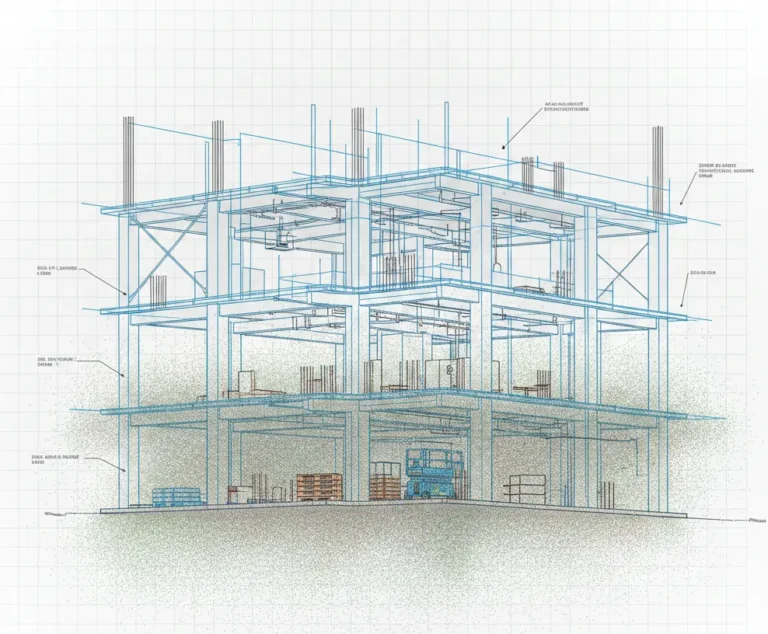
As-built models are commonly integrated into BIM environments to support coordination, documentation, and asset planning workflows. These models may be used as reference files, coordination bases, or starting points for future design development.
Accurate as-built information improves alignment between existing conditions and proposed works, supporting more efficient coordination and reduced rework during subsequent project stages.
Accuracy, Standards and Model Outputs
As-built models are developed to align with project documentation requirements and BIM standards. Model accuracy levels are defined based on intended use, whether for coordination reference, facility management, or future design works.
Outputs are prepared in formats compatible with BIM and CAD platforms, allowing the models to be reused efficiently across different project applications.
Relationship With 3D Scanning and BIM Services
As-built modelling frequently follows 3D scanning or reality capture services, using spatial data as the foundation for model development. The combination of verified site capture and structured modelling supports higher confidence in documentation accuracy.
These models may also be used alongside coordination and BIM services to support refurbishment planning, clash validation, and long-term asset documentation.
Project Requirements & Next Steps
As-built modelling services are typically engaged when accurate representation of installed conditions is required to support coordination, documentation, or future project planning. Where reliable site records are essential, this service provides a structured and dependable modelling approach.
What is as-built modelling?
As-built modelling represents the actual installed condition of a building after construction or refurbishment.
How is as-built modelling different from design modelling?
As-built models reflect verified site conditions rather than design intent.
What data is used to create as-built models?
Redline drawings, site documentation, construction records, and 3D scan data.
Why are as-built models important?
They support asset management, maintenance planning, future upgrades, and coordination validation.
Can as-built models be integrated into BIM workflows?
Yes, they are commonly used as reference models for future BIM coordination and design work.
AS Built Modelling Services - FAQs
Contact