Clash Detection and Coordination in
Construction Projects
Clash detection and coordination services are used to identify and resolve spatial and system conflicts within coordinated BIM models before construction begins. This process helps ensure that building elements and services can be installed as intended without interference, rework, or unexpected site issues.
Clash detection is commonly applied during design development and pre-construction stages, where early identification of conflicts supports smoother construction workflows and improved coordination between disciplines.
What Clash Detection and Coordination Represents
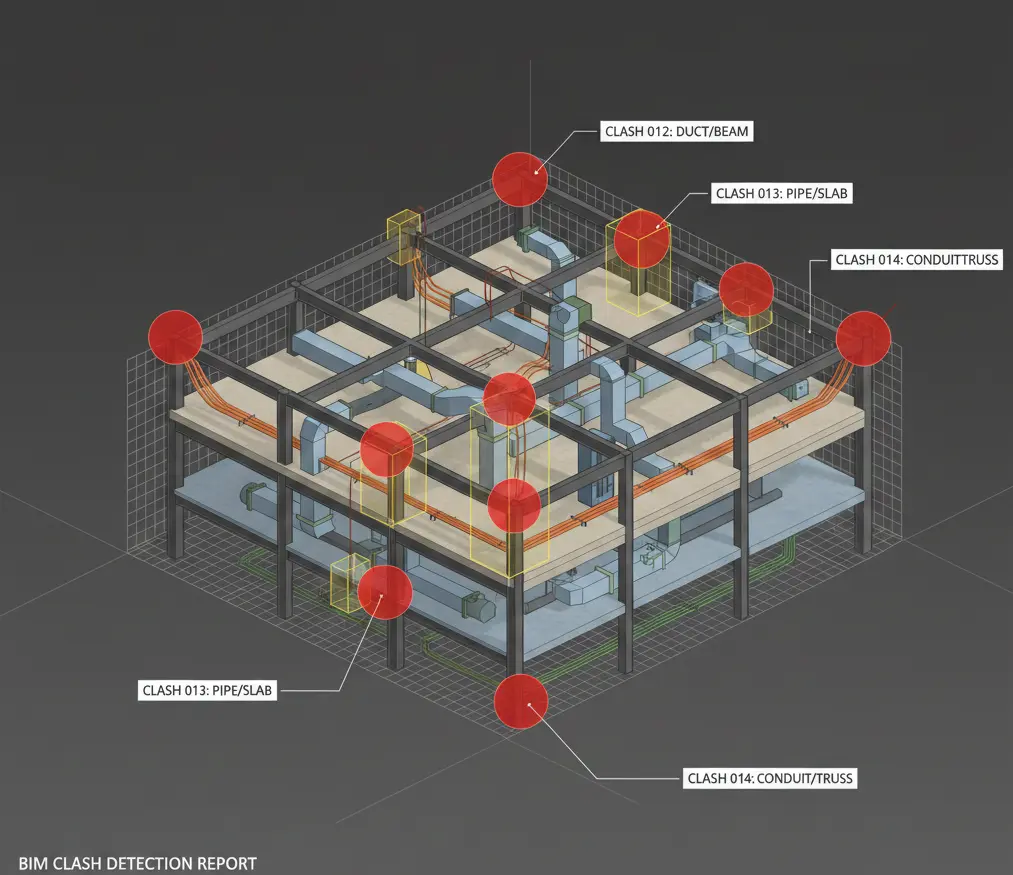
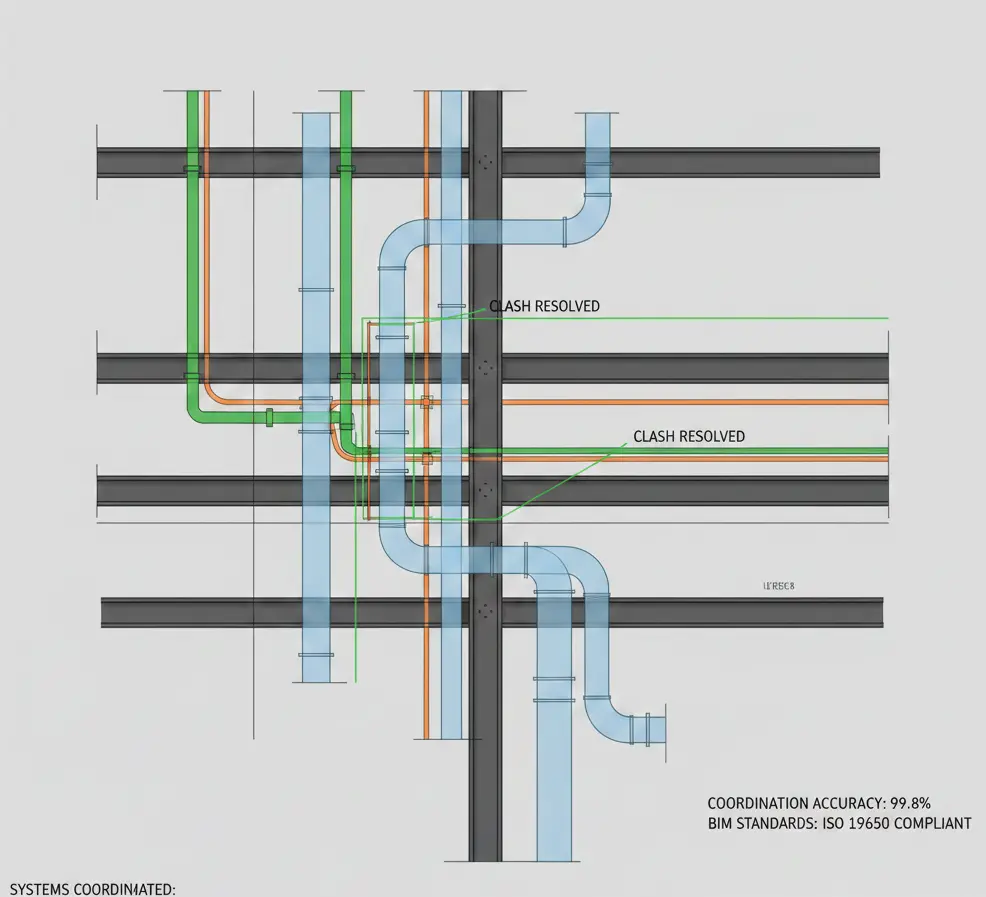
Clash detection represents the systematic review of coordinated BIM models to identify physical conflicts, clearance issues, and spatial constraints between building elements and services. Coordination activities focus on resolving these conflicts through structured model updates and design alignment.
This process supports informed decision-making by highlighting potential installation issues early, reducing reliance on reactive problem-solving during construction.
When Clash Detection Services Are Required
Clash detection services are typically required on projects involving multiple disciplines working within shared spaces. They are widely used during detailed design and pre-construction coordination phases, particularly where building services density is high.
The service is also applied when design changes occur late in the project, requiring re-coordination to confirm constructability before site execution.
Project Types That Use Custom Revit Families
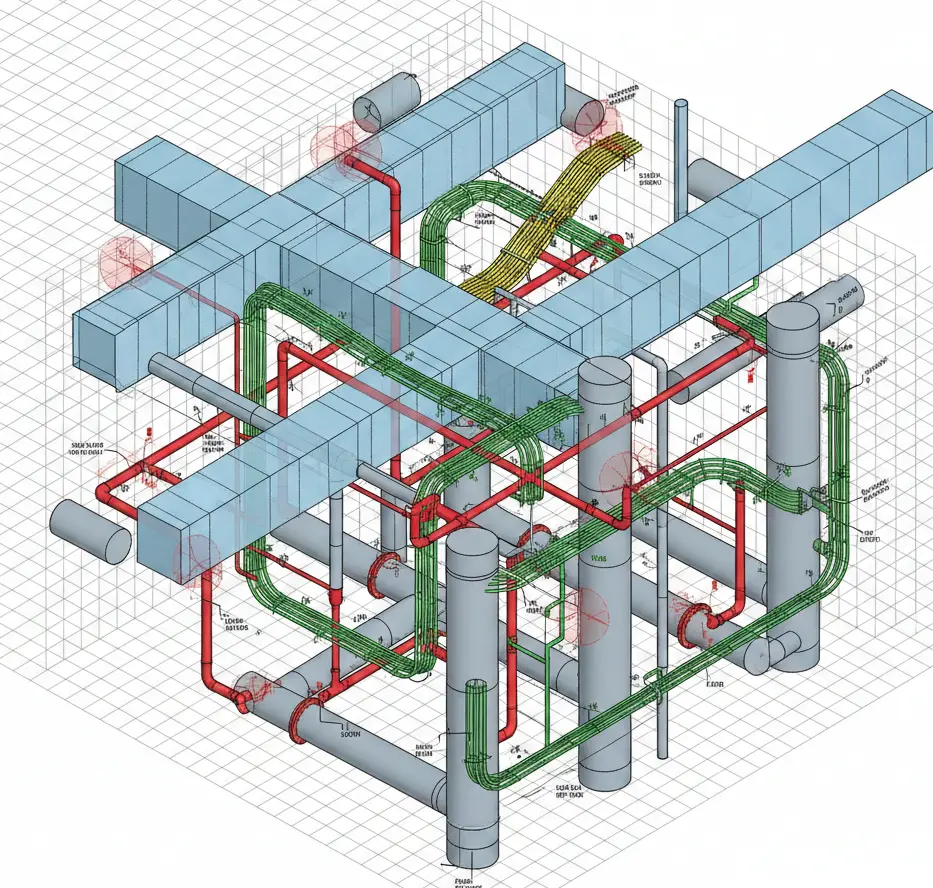
Clash detection and coordination services are applied across commercial, industrial, healthcare, education, and residential projects. They are especially valuable in plant rooms, risers, ceiling voids, and service corridors where multiple systems must coexist within limited space.
These services support both new construction and refurbishment projects by improving coordination clarity across disciplines.
Integration With BIM and Construction Workflows
Clash detection is integrated into BIM workflows to support coordination reviews, issue tracking, and model updates. Identified clashes are reviewed, resolved, and validated through coordinated model revisions, ensuring alignment with construction requirements.
This integration helps maintain consistency between design intent, coordination outcomes, and construction documentation.
Accuracy, Coordination Standards and Reporting
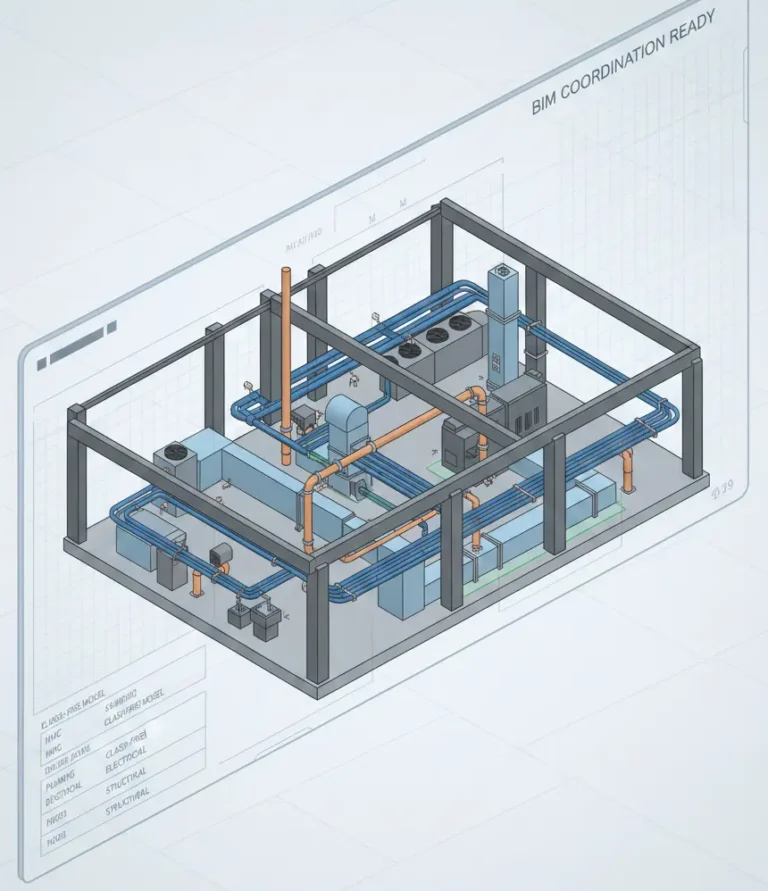
Clash detection and coordination activities are carried out in line with project coordination standards and BIM execution plans. Clash tolerances, resolution priorities, and reporting structures are defined based on project requirements.
Clear coordination reporting supports transparent communication between project stakeholders and helps track resolution progress throughout the coordination process.
Relationship With Revit Modelling and BIM Services
Clash detection and coordination services rely on accurate Revit modelling and structured BIM data. Well-developed models and consistent modelling practices improve the effectiveness of coordination reviews and reduce false or repetitive clashes.
These services are often used alongside Revit modelling, scan-based modelling, and as-built workflows to support coordinated project delivery.
Project Requirements & Next Steps
Clash detection and coordination services are engaged when coordinated BIM models are required to support constructability, reduce risk, and improve installation outcomes. Where early conflict identification and structured coordination are critical, this service supports reliable project delivery.
What is clash detection in BIM?
Clash detection identifies physical conflicts and clearance issues between architectural, structural, and MEP systems within BIM models.
When should clash detection be performed?
It is typically carried out during design development and pre-construction coordination stages.
What types of clashes are identified?
Hard clashes, soft clashes, and clearance conflicts between building elements and services.
How does clash detection reduce construction risk?
By resolving issues digitally before construction, it minimizes site rework, delays, and cost overruns.
Which projects require BIM coordination services?
Projects with dense services such as hospitals, industrial facilities, commercial buildings, and complex refurbishments.
Clash Detection & Coordination Services - FAQs
Contact